


Updates to the UK Medical Device Regulations

The regulatory landscape for medical devices, including in vitro diagnostics (IVDs), in the United Kingdom (UK) is undergoing a significant transformation. This article outlines key updates to the UK’s future medical device regulations, their implications for the industry, and guidance for regulatory professionals navigating these changes.
Current Regulations Governing the Sale & Supply of In Vitro Diagnostic (IVD) Medical Devices in the UK
The UK’s regulatory framework for medical devices has evolved in response to Brexit-induced divergence from the European Union’s (EU) Medical Device Regulation (MDR) and In Vitro Diagnostic Regulation (IVDR) as well as the need to enhance patient safety while supporting MedTech innovation.
Since January 1, 2021, several changes have impacted how medical devices, including IVDs, are placed on the market in the UK. In Great Britain (GB – England, Wales and Scotland), IVDs are currently regulated under the Medical Devices Regulations 2002 (SI 2002 No 618, as amended) (UK MDR 2002)[1] which remains largely based on the EU Directive 98/79/EC (IVDD)[2].
Under the Northern Ireland Protocol[3], different rules apply allowing Northern Ireland to continue following EU law. Thus, CE marking remains mandatory for devices sold in Northern Ireland, the EU, and the European Economic Area (EEA).
Implementation of the Future Regulations
In 2022, the UK government published its “Government response to consultation on the future regulation of medical devices in the United Kingdom”[1], outlining a phased approach to reform the UK MDR.
In early 2024, the Medicines & Healthcare products Regulatory Agency (MHRA) released a regulatory roadmap detailing the 2024-2025 timelines for delivering the new framework. This roadmap was revised in December of 2024 (version 2.0)[2] to reflect updated timelines.
Key Updates:
- New Post-Market Surveillance (PMS) Regulations – The PMS statutory instrument (SI) was signed into law in December 2024 and will come into force in June 2025 after a six-month transition period.
- Pre-Market SI – Changes will include new IVD classification rules, revised conformity assessment procedures, and new IVD approval pathways including international recognition routes. The necessary SI is expected to be introduced to Parliament in late 2025 and come into force in 2026.
- Software, AI & Digital Mental Health Products – The MHRA is expected to publish new/draft guidance on AI development and deployment, cybersecurity and digital mental health technologies in 2025.
- IVD Policy Development – New policies and guidance for Exceptional Use Authorisation and Early Access and Use are in development, with a dedicated roadmap expected by Q4 of 2025.
NEW Post-Market Surveillance (PMS) Requirements
The Medical Devices (Post-market Surveillance Requirements) (Amendment) (Great Britain) Regulations 2024[6] introduced stricter obligations for manufacturers, aligning UK requirements more closely with the EU IVDR and MDR while maintaining unique GB-specific elements. The MHRA have published guidance[7] to aid in implementation.
Key PMS Changes for IVDs:
- Comprehensive PMS Documentation – Manufacturers must maintain a PMS system, submit detailed PMS plans, and, for certain risk classes, provide Periodic Safety Update Reports (PSURS).
- Stronger Reporting Obligations:
- Serious public health threats – Report within 2 calendar days after the manufacturer becomes aware.
- Death or unanticipated serious deterioration in state of health – Report within 10 calendar days after the manufacturer becomes aware.
- Anticipated serious deterioration in state of health – Report withing 15 calendar days after the manufacturer became aware.
- Field Safety Corrective Actions (FSCAs) – Report immediately upon initiation.
- Field Safety Notices (FSNs) – Distribute to users and stakeholders without delay to mitigate risks.
- Improved Traceability and Transparency – Enhanced supply chain reporting and tracking obligations to ensure patient safety.
- Risk-Based Compliance Adjustments – PMS requirements vary by:
- Device type (general IVDs, high-risk IVDs, etc.)
- Basis of conformity assessment (UKCA, IVDD, or IVDR).
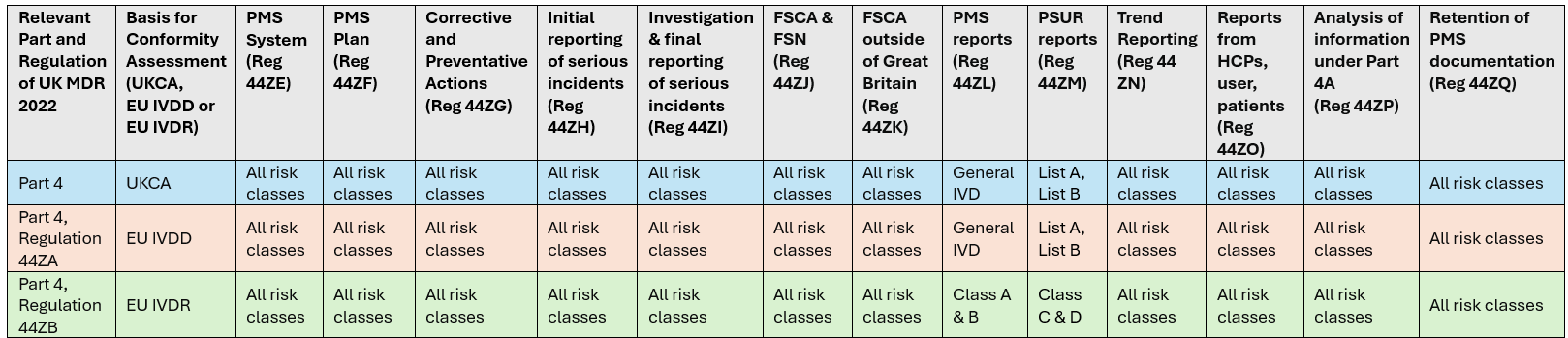
Table 1 reproduces the PMS obligations specific to IVD devices based on conformity assessment[8]. Most requirements are the responsibility of the Manufacturer; however, certain requirements may be delegated to the UK Responsible Person (UKRP)[9].
Exceptions: The new PMS requirements do not apply to:
- Devices subject to clinical investigation, performance evaluation or exceptional use authorisation in GB.
- Devices discontinued before the SI enforcement date (these remain subject to MED DEV 2.12 PMS requirements[10]).
- Devices placed on the market or put into service in Northern Ireland (NI), which must follow the PMS requirements of EU MDR 2017/745 and EU IVDR 2017/746.
The MHRA has published guidance documents clarifying implementation details [11], including stakeholder consultation opportunities through trade associations[12].
Table 1. PMS obligations specific to IVDs* (click to enlarge)
Transitional Arrangements & Industry Impact
Key Transition Deadlines
Regulatory professionals must monitor the following deadlines[13] to ensure continued market access:
- CE-Marked Devices – Transitional allowances until December 31, 2027 for most IVDs (and medical devices), with risk-class specific phase-out dates through 2030.
- UKCA Marking – The UK is shifting towards full UKCA marking adoption, requiring manufacturers to transition accordingly.
- Guidance & Support – MHRA has committed to publishing comprehensive guidance, with further updates expected in 2025.
What Regulatory Professionals Should Do Now
To prepare for the upcoming changes, regulatory professionals should:
- Monitor Implementation Timelines – Stay informed on MHRA consultations, SI publications, and transition deadlines.
- Engage with MHRA Guidance – Regularly review PMS updates, UKCA transition arrangements, and new IVD-specific regulations.
- Conduct regulatory gap analyses – Identify necessary updates to PMS documentation, quality management systems and labeling.
- Collaborate with Industry Peers – Participate in trade associations, regulatory working groups, and discussions with UK Approved Bodies.
- Plan for UKCA Transition – Develop a clear strategy for transitioning from CE to UKCA marking.
Our Expertise in IVD & Medical Device Compliance
At Beaufort, we offer extensive expertise in IVD regulatory affairs, clinical research, quality management, and market access. Our team of regulatory experts can help you:
- Develop & Implement PMS Systems – Ensure compliance with the new UK PMS requirements, including PMS plans, PSURs, and incident reporting.
- Prepare for UKCA Marking – Assist with conformity assessments, documentation updates, and transition planning.
- Regulatory Gap Analysis & Compliance Strategy – Identify compliance gaps and develop gap-closure roadmaps.
- Regulatory Submission Support – Guide you through the MHRA regulatory submission process, including exceptional use authorizations and performance evaluations.
- Performance Evaluation Support – Design clinical and performance evaluation studies to meet new UK and international requirements.
- Training & Consultation – Provide customized regulatory training and consultation.
Final Thoughts
With the UK’s evolving regulatory framework, staying ahead of the MHRA roadmap is critical for IVD manufacturers and regulatory professionals. As a trusted CRO partner, Beaufort is ready to help companies navigate these regulatory changes, maintain compliance, and ensure market access in the UK.
For more information on how Beaufort can support your UK regulatory strategy, contact us directly at [email protected] or provide your contact information here.
[1] Medicines and Healthcare products Regulatory Agency. Guidance Regulating medical devices in the UK. Published 15 January 2025. Accessed February 5, 2025. https://www.gov.uk/guidance/regulating-medical-devices-in-the-uk#NI.
[2] Medicines and Healthcare products Regulatory Agency. Guidance on the regulation of In Vitro Diagnostic medical devices in Great Britain. Published January 2025. Accessed February 5, 2025. https://assets.publishing.service.gov.uk/media/67863a313ef063b15dca0f47/Guidance_on_the_regulation_of_IVD_medical_devices_in_GB.pdf.
[3] Medicines and Healthcare products Regulatory Agency. Guidance for retailers: supplying medical devices to Northern Ireland. Last updated 5 March 2021. Accessed February 5, 2025. https://www.gov.uk/guidance/guidance-for-retailers-supplying-medical-devices-to-northern-ireland#:~:text=A%20key%20part%20of%20the,to%20the%20relevant%20EU%20legislation
[4] Medicines and Healthcare products Regulatory Agency. Government response to consultation on the future regulation of medical devices in the United Kingdom. Published 26 June 2022. Accessed February 5, 2025. https://assets.publishing.service.gov.uk/media/62b577f6d3bf7f0b00165a32/Government_response_to_consultation_on_the_future_regulation_of_medical_devices_in_the_United_Kingdom.pdf. [1] Medicines and
[5] Healthcare products Regulatory Agency. Medical Devices Regulatory Reform Roadmap to implementation. Version 2.0 (December 2024). Accessed February 5, 2025. https://assets.publishing.service.gov.uk/media/6759a8827e419d6e07ce2b21/Med_Tech_Regulatory_Roadmap_V2_December_2024.pdf.
[6] The Medical Devices (Post-market Surveillance Requirements) (Amendment) (Great Britain) Regulations 2024 – UK Statutory Instruments 2024 No. 1368 Assessed February 10, 2025. https://www.legislation.gov.uk/uksi/2024/1368/contents/made
[7] Medicines and Healthcare products Regulatory Agency. Guidance The Medical Devices (Post-market Surveillance Requirements) (Amendment) (Great Britain) Regulations 2024: guidance on implementation. Published 15 January 2025. Accessed February 5, 2025. https://www.gov.uk/government/publications/medical-devices-post-market-surveillance-requirements/the-medical-devices-post-market-surveillance-requirements-amendment-great-britain-regulations-2024-guidance-on-implementation
[8] Medicines and Healthcare products Regulatory Agency. Guidance Post-market surveillance (PMS) obligations by medical device type. Published 15 January 2025. Accessed February 5, 2025.https://www.gov.uk/government/publications/medical-devices-post-market-surveillance-requirements/post-market-surveillance-pms-obligations-by-medical-device-type
[9] Medicines and Healthcare products Regulatory Agency. Guidance Post-market surveillance requirements for medical devices: summary of main changes. Published 15 January 2025. Accessed February 5, 2025. https://www.gov.uk/government/publications/medical-devices-post-market-surveillance-requirements/post-market-surveillance-requirements-for-medical-devices-summary-of-main-changes
[10] Guidance MEDDEVs. Accessed February 5, 2025. https://health.ec.europa.eu/document/download/c1a6aa0b-d8c8-498b-8ed4-9f3c6211896d_en
[11] Medicines and Healthcare products Regulatory Agency. Guidance The Medical Devices (Post-market Surveillance Requirements) (Amendment) (Great Britain) Regulations 2024: guidance on implementation. Published 15 January 2025. Accessed February 5, 2025. https://www.gov.uk/government/publications/medical-devices-post-market-surveillance-requirements/the-medical-devices-post-market-surveillance-requirements-amendment-great-britain-regulations-2024-guidance-on-implementation.
[12] Medicines and Healthcare products Regulatory Agency. Press release. MHRA guidance on new Medical Devices Post-Market Surveillance requirements. Published 15 January 2025. Accessed February 5, 2025. https://www.gov.uk/government/news/mhra-guidance-on-new-medical-devices-post-market-surveillance-requirements
[13] Medicines and Healthcare products Regulatory Agency. Infographic – Timelines for placing CE marked IVDs on the Great Britain market. Accessed February 10, 2025. https://assets.publishing.service.gov.uk/media/6718b88738149ce9d09e3894/Infographic_-_Devices_transition_timeline.pdf

Senior Vice President
Planning a clinical trial for medical devices, including in vitro diagnostics (IVDs), is a complex, multi-faceted process that requires strategic thinking, careful preparation, and foresight. According to industry data, nearly 30% of clinical trials fail to secure regulatory clearance or approval, often due to inadequacies in trial design, data collection, or regulatory alignment. Additionally, up to 80% of clinical trials face delays or cost overruns, primarily because of insufficient planning in areas such as subject recruitment and risk management. To help avoid these pitfalls and improve your chances of success, here are some key considerations when planning your next clinical trial.
1. Engaging Early and Often with Regulatory Authorities
There are a multitude of considerations and influencing factors that inform both regulatory strategy and study planning for your product development. To help your trial start off on the right track and meet all necessary requirements, ongoing communication with regulatory bodies is essential. In the U.S., leveraging resources like the FDA’s pre-submission process can clarify performance expectations and help align your trial with regulatory requirements. Early engagement reduces the likelihood of having to make significant adjustments late in the trial process. Regular interaction helps to address concerns before they become roadblocks. Beaufort has extensive experience partnering with sponsors who rely on our expertise navigating regulatory complexities.
2. Conducting Thorough Feasibility Studies
Clinical feasibility studies can identify potential issues with your trial design before investing time and resources on a full trial. By designing relevant and appropriate feasibility studies, you can ensure that your timeline is realistic, that the site(s) selected meet the needs of your trial, and that the trial design is viable. By evaluating the constraints your clinical trial will have on a smaller scale, you can preempt issues that can commonly occur during trial execution.
3. Risk Management and Contingency Planning
Clinical trials often face unexpected challenges, such as subject recruitment delays, supply chain disruptions, product design changes, or regulatory setbacks. Incorporating a proactive risk management strategy and developing contingency plans are crucial for minimizing the impact of these issues. Our team’s extensive risk management experience can help you rigorously evaluate, refine, and implement risk management activities that prepare you for common obstacles, keeping your trial on schedule and within budget.
4. Developing a Robust Protocol
A clear, detailed protocol is essential to a successful clinical trial. It ensures that investigators, sponsors, and other stakeholders are aligned on their roles and responsibilities, as well as ensuring consistency in execution. Having a transparent, clear protocol will minimize the potential for misunderstandings among stakeholders and also with regulatory authorities.
5. Prioritizing Site Training and Support
Comprehensive site training and supporting trial sites are essential to your success. Extensively reviewing with site personnel the specific requirements for handling devices, collecting data, or processing specimens is critical. Regular communication and support ensure consistency and adherence to trial protocols, and potentially minimizes the risk of errors and deviations.
6. Comprehensive Monitoring
A robust Monitoring Plan guides the project team to monitor your trial properly, maintaining participant safety and data integrity. Effective monitoring ensures that the protocol is being followed and allows for early detection of issues, increasing operational efficiency. The monitoring process also enhances communication between sponsors, investigators, and sites, providing an opportunity for a quick resolution to any issues and reinforcing alignment with the overall goals of the trial. By focusing on protocol adherence and proper documentation, sponsors and sites are better prepared for potential audits, and eventually regulatory inspections.
7. Investing in Strong Data Management
For medical device trials that generate large volumes of complex data, effective data management is vital. Data must be securely and accurately collected to preserve quality and validity. Implementing robust electronic data capture (EDC) systems and adhering to Good Clinical Practice (GCP) standards will minimize errors and ensure compliance. Beaufort’s data sciences team is able to design custom data management solutions to fit your trial, maintaining the integrity and security of your data across the entire trial.
8. Leveraging Technology for Trial Optimization
The use of advanced technologies like AI, machine learning, and automation is becoming increasingly embedded in the clinical trial management process. AI-driven patient recruitment tools and predictive analytics can improve trial efficiency, while automation in data collection reduces human error. Tools such as wearable trackers and telehealth are developing quickly to meet the needs of decentralized trials and remote monitoring. Utilizing these technologies can help streamline processes, reduce costs, and increase the likelihood of regulatory success.
Successful clinical trials for IVDs and other medical devices require thoughtful planning and execution. By taking these key considerations into account, sponsors can significantly improve the chances of regulatory success, stay within budget, and complete clinical trials on time.
At Beaufort, we have extensive experience guiding sponsors through the complexities of trial planning and execution. Whether it’s navigating regulatory pathways, optimizing trial design, site recruitment and management, or ensuring data integrity, we can help you successfully manage your next clinical trial from start to finish.
Learn more about our comprehensive Clinical Trial Services & Solutions or Contact Us today.

Beaufort steps in mid-study and delivers comprehensive data management, robust safety monitoring, and expert statistical analysis.

Overview
Spectral Medical Inc., a late-stage theranostic company specializing in sepsis and septic shock therapies, engaged Beaufort to support a prospective, multicenter, randomized, open-label clinical trial. The trial evaluates the efficacy and safety of including a PMX (Polymyxin B Hemoperfusion) cartridge in the standard care regimen for patients with endotoxemic septic shock. The outcomes of patients receiving standard medical care alone are compared with the outcomes of patients treated with standard medical care combined with the PMX cartridge. Participants are randomly allocated to a treatment arm, with the experimental arm receiving treatment with TORAMYXIN PMX-20R, an extracorporeal PMX cartridge that selectively removes endotoxin through direct hemoperfusion of circulating blood.
Project Deliverable
Spectral turned to Beaufort mid-study to address growing data complexities and integrate
previously managed data under a more efficient and comprehensive system. This involved the
transfer of the pre-existing study data to a new Electronic Data Capture (EDC) system built by the
Beaufort data team. Beaufort also worked closely with the study’s Independent Safety Assessment
Committee (iSAC), providing feedback and analysis to support planned safety data.
Beaufort Results
Beaufort’s engagement yielded critical improvements and ensured the study maintained the
highest data integrity and participant safety. Through continuous collaboration with sites, the
safety committee, and the Sponsor, Beaufort achieved the following outcomes:
Innovative EDC Development:
Beaufort developed a custom EDC system that would mimic the basic structure of the existing EDC and incorporate randomization and safety data which had previously been managed through separate systems. The EDC also integrated data from a sub-study which was captured through paper records. By creating a system that was more standardized and modernized, Beaufort ensured a smooth data transition without compromising integrity.]
Comprehensive Data Verification:
Beaufort’s data science team worked diligently to verify all active queries in the existing EDC to demonstrate the accuracy of previously generated data. The team leveraged their extensive experience to efficiently and competently confirm query functionality.
Seamless Data Transfer with Rigorous Quality Control:
The transfer of pre-existing data into the newly developed EDC required meticulous planning. Beaufort executed a test transfer to anticipate potential issues and implemented a one-week freeze on new data input to facilitate a clean transition. Additionally, all manually input data was systematically examined by Beaufort’s team and underwent 100% quality control to ensure the original data was preserved
Data Modernization and Standardization for Improved Efficiency:
The original EDC used non-standard formatting that couldn’t easily be integrated with other EDCs. Beaufort re-engineered the new EDC to modernize outdated medical coding and formatting, aligning with current industry standards, enabling better interoperability and future-proofing data management. All data sets impacted by these improvements underwent 100% QC to maintain data integrity.
Comprehensive Training and Support for EDC Implementation:
To ensure smooth adoption of the new EDC system, Beaufort provided hands-on training to sites, coordinators, and the Spectral team. This empowered all stakeholders to efficiently manage trial data on the custom EDC, ensuring all stakeholders could comfortably and competently manage data using the new system and minimizing any disruption to the ongoing study.
Intensive Focus on Safety Monitoring and Statistical Analysis:
Beaufort’s Pharmacovigilance team played a pivotal role in safety monitoring, providing the iSAC with the data they needed for regular reviews. Beaufort’s Biostatistics team utilized advanced statistical methodologies and rigorous data analysis to ensure that patient safety remained at the forefront of the trial.
- Generation of Tables, Listings, and Figures (TLFs): To support the iSAC’s safety evaluations, Beaufort generated clear and concise TLFs, providing visual representations of safety trends and endpoints based on the new EDC system and in alignment with the iSAC charter. These reports allowed for easy interpretation by iSAC members.
- In-Depth Trend and Signal Detection: Beaufort’s statisticians reviewed the data to detect trends and potential safety signals in the trial data. This early detection allowed the iSAC to address safety risks in real-time, helping to protect patient well-being.
- Regulatory-Compliant Adverse Event Reporting: All Serious Adverse Events (SAEs) were thoroughly tracked, analyzed, and reported to the Sponsor and if applicable, reported to the regulatory authorities. This ensured that the study adhered to the highest standards of compliance and safety management.
In partnership with Spectral Medical Inc., Beaufort demonstrated its ability to step in mid-study and deliver comprehensive data management, robust safety monitoring, and expert statistical analysis. Beaufort’s attention to detail and commitment to data integrity ensured the clinical trial ran smoothly, with participant safety as the highest priority. The result was a streamlined, reliable trial process that allowed Spectral to focus on advancing critical therapies for septic shock.
Learn more about how Beaufort can successfully support your current or future clinical trail.

The clinical research landscape for in-vitro diagnostics (IVD) and medical devices is experiencing a rapid evolution driven by technological advancements. The COVID-19 pandemic certainly spurred the development and integration of new technology platforms with necessity largely driving industry adoption. Many sponsors are not realizing the full potential of the latest advances to improve the management and execution of their medical device clinical trial services and IVD programs, even as technology platforms continue to evolve rapidly.

Senior Vice President, Chief Technology Officer
As a forward-thinking Contract Research Organization (CRO), Beaufort has maintained momentum and continues to apply best-of-breed technology solutions that deliver measurable benefits for sponsors, sites, and patients. This technology focus has allowed our clients the ability to leverage our expertise and apply these innovations to streamline processes, enhance data quality, ensure regulatory compliance, and, ultimately, simplify and accelerate the development of ground-breaking products.
Optimizing the IVD and Medical Device Trial Journey with Technology
There are a wide variety of systems and tools that can help optimize operations within the clinical research paradigm and offer time and cost savings for sponsors.
eSource and Direct Data Capture:
Data acquisition within the trial environment remains a significant challenge. Studies are capturing more and more data all while maintaining the mandate for safety, quality, and completeness. For diagnostic trials, eSource allows for the direct capture of data from laboratory instruments and laboratory information management systems (LIMS), eliminating manual transcription errors and ensuring data integrity. Similarly, for medical device trials, eSource can integrate with device data streams, providing real-time insights into device performance. Direct Data Capture (DDC) allows clinical sites to input information directly in the Electronic Data Capture (EDC) system, removing cumbersome and time-intensive transcription from paper.eConsent and Patient Engagement:
Providing the ability to engage patients wherever they might be, eConsent platforms deliver a user-friendly interface for patients to electronically review informed consent documents, ask questions, and provide electronic signatures, enhancing patient engagement and streamlining the consent process. In addition, eConsent platforms can integrate directly with the EDC, allowing for efficiencies like automatic subject creation and the triggering of consent-driven workflows. Integration of hybrid solutions that continue to offer paper-based options helps eliminate adoption concerns for subject populations that are hesitant to use electronic forms.Data Integration and Real-Time Visibility:
Fragmentation of data across disparate systems can hinder efficient trial management. Advanced data integration tools allow for seamless exchange of information between clinical trial management systems (CTMS), LIMS, EDC and device data streams, providing a holistic view of the trial in real-time. Beaufort has found that having integrated platforms allows for the rapid performance of interim data analysis and enhanced visibility into overall trial trends and potential issues.Operational Analytics and Data-Driven Decisions:
Operational performance is crucial to running a successful trial. By bringing together data from various clinical platforms, the savvy CRO is able to provide key performance indicators around monitoring and site performance. These insights enable proactive course correction, improved resource allocation, and optimized trial execution.Cybersecurity and Data Protection:
The backdrop of ever-evolving cybersecurity threats presents sponsors with considerable challenges in ensuring their products are both compliant and secure. Add to this increasing regulatory requirements and it becomes critical to select a partner with extensive cybersecurity experience. Maintaining compliance with industry regulations like 21 CFR Part 11, HIPAA and GDPR is paramount. In addition, recent regulatory guidance has greatly expanded the need to document all components of a proposed product to include vulnerability assessment and threat modeling.Automation and Streamlined Workflows:
Repetitive tasks such managing regulatory documents, scheduling site visits and monitoring trial timelines can be automated, freeing up valuable human resources for higher-level activities like data analysis, risk management, recruitment/enrollment, and protocol development.
The Power of Partnership: Why Technical Experience Matters
Applying a holistic and platform-agnostic view ensures access to the best-fit solutions for each specific IVD or medical device trial
A CRO’s established relationships with a wide variety of platform providers offer a significant advantage for sponsor programs. Applying a holistic and platform-agnostic view ensures access to the best-fit solutions for each specific IVD or medical device trial, considering factors such as device compatibility, regulatory compliance, and integration capabilities.
Beaufort’s team has considerable experience in evaluating and utilizing the latest technology solutions. We bring a deep understanding of the strengths and value of leading platforms and can provide seamless integration and ongoing support, maximizing efficiencies and minimizing disruption for study teams.
Navigating the Evolving Regulatory Landscape and Addressing Emerging Challenges
The regulatory landscape for IVD and medical devices has also been evolving to address guidance issues as it relates to cybersecurity and technology. It is critical for a CRO to proactively monitor regulatory changes and ensure their technology stack remains compliant with the latest guidelines, such as the EU IVDR and the US FDA’s regulations for medical devices. Additionally, rapidly advancing fields like Artificial Intelligence (AI) hold exciting potential in areas like image analysis and clinical trial design, but also raise questions about validation, ethical considerations, and regulatory clarity. A proactive CRO, like Beaufort, actively engages with regulatory bodies and industry stakeholders to address these challenges and ensure trials remain compliant and ethically sound.
Choosing the Right Partner for Success
Selecting the right CRO is crucial for the success of IVD and medical device trials. Look for a partner with:

Proven track record of leveraging technology:
Experience in applying the latest technological advancements specifically within the context of IVD and medical device trials.Established relationships with leading platform providers:
Access to a wide range of best-fit technology solutions tailored to the specific needs of your trial.Commitment to navigating the evolving regulatory landscape:
Proactive approach to ensuring compliance with the latest IVD and medical device regulations.Deep understanding of IVD and medical device workflows:
Expertise in streamlining trial processes and optimizing data collection specific to these fields.Thorough knowledge of evolving Cybersecurity and Privacy requirements:
Wide experience with documenting and performing cybersecurity risk assessments, threat modeling, vulnerability remediation, and change management.
By partnering with a tech-savvy CRO like Beaufort that demonstrates these qualities, you gain a valuable extension of your team, equipped to drive efficiency, data quality, and ultimately, accelerate the development of innovative IVD and medical device solutions that improve patient care.
Contact us today to see how Beaufort applies technology to support your next clinical research project.
Learn MoreWorld Sepsis Day highlights the urgent need to decrease mortality rates caused by sepsis which is the leading cause of non-cardiac death in U.S. hospitals.

Beaufort, a leading global contract research organization, is providing comprehensive clinical trial services and regulatory affairs for Spectral Medical’s TIGRIS trial, a Phase 3 follow-on study evaluating the use of a Polymyxin B Hemoperfusion device (“PMX”) in a randomized controlled trial of adults treated for endotoxemia and septic shock.
Beaufort will oversee clinical trial management, data management, biostatistics, quality assurance and regulatory activities to obtain U.S. FDA approval for Spectral’s breakthrough device product to improve the prognosis of U.S. patients diagnosed with sepsis. The PMX cartridge is a therapeutic hemoperfusion device that removes endotoxin from the bloodstream and the use of the PMX device is guided by the Company’s Endotoxin Activity Assay (EAA™), the only FDA cleared diagnostic when used in conjunction with other clinical information and other relevant diagnostic tests aids in the risk assessment of patients in the ICU for progression to severe sepsis. The TIGRIS trial end point is a reduction in the 28-day mortality in subjects with septic shock using the PMX hemoperfusion cartridge and standard of care versus standard of care.
In selecting Beaufort as its CRO, Spectral recognized our extensive Point of Care ICU clinical trial experience…
Sepsis Awareness Month (September) and World Sepsis Day (September 13th) both highlight the critical importance of this clinical trial as sepsis kills 350,000 U.S. adults annually, more than opioid overdoses, breast cancer, and prostate cancer combined. More than 75,000 children in the U.S. are diagnosed with sepsis each year and results in more pediatric deaths than cancer. Sepsis is also the leading cause of non-cardiac death in U.S. hospitals and accounts for 20% of annual global deaths.
In selecting Beaufort as its CRO, Spectral recognized our extensive Point of Care ICU clinical trial experience, which will promote optimized site and patient recruitment, efficient electronic data collection and management, and comprehensive safety reporting and management. Beaufort’s team will provide close coordination with sites and robust quality assessments, ensuring that sites are inspection-ready throughout the study.
In May, Spectral and Beaufort met with Principal Investigators and Clinical Research Coordinators from the TIGRIS trial sites to provide training and educational materials as well as support accelerated patient recruitment and enrollment efforts. Since the meeting, enrollment activities have surged and now align with program milestones. Video footage was also taken during the meeting and will be included in an upcoming Lifetime television program, The Balancing Act, to bring awareness to advancing therapeutic options for sepsis and endotoxic septic shock (ESS).
Watch the Lifetime episode here:
If you are looking for a CRO services partner that can best meet your needs, please contact us to learn about our full range of clinical, regulatory, and quality solutions and how you can benefit from the experience Beaufort provides our diagnostic clients.