

Introduction
Since application of Regulation (EU) 2017/746 on in vitro diagnostic medical devices (IVDR) in May 2022, CDx manufacturers, medicine sponsors, notified bodies, national competent authorities (NCAs), and the European Medicines Agency (EMA) have accumulated practical experience with the European companion diagnostic regulatory framework.
The IVDR established a dedicated regulatory framework for companion diagnostics, including classification as Class C devices, conformity assessment by a notified body, and mandatory consultation of the appropriate medicines authority regarding the suitability of the companion diagnostic in relation to the corresponding medicinal product.¹
Several years of implementation experience have highlighted recurring challenges: determining whether a test meets the IVDR definition of a companion diagnostic, applying the consultation procedure, and achieving alignment between therapeutic labeling and diagnostic intended use.
These same themes appear in the mandates and published outputs of two recently established EMA initiatives: the Companion Diagnostics Expert Group (CDx Expert Group) and the Combination Products Operational Group (COMBO). Although both groups address companion diagnostics, they serve fundamentally different purposes and operate at different levels of the regulatory system, as discussed below.
Understanding why these groups were established provides useful insight into the practical challenges encountered during implementation of the IVDR companion diagnostic framework and how European regulators are responding to them.
Companion Diagnostics Under the IVDR
Article 2(7) of the IVDR defines a companion diagnostic as a device which is essential for the safe and effective use of a corresponding medicinal product to identify patients most likely to benefit from treatment with the medicinal product, or patients likely to be at increased risk of serious adverse reactions as a result of treatment with the corresponding medicinal product.¹
Although a companion diagnostic may support more than one medicinal product, the determination of whether a device is a companion diagnostic is made in relation to a specific therapeutic use and clinical decision. Not every biomarker test used in oncology or precision medicine meets the IVDR definition.
Determining whether a test meets the IVDR Article 2(7) definition has significant regulatory consequences because it affects the applicable conformity assessment procedure, including whether consultation with a medicines authority is required.
Unlike the prior IVDD framework, the IVDR established specific classification and conformity assessment requirements for companion diagnostics. Companion diagnostics are classified as Class C devices and require conformity assessment by a notified body before CE marking.¹ In addition, IVDR Article 48 and Annex IX Section 5.2(c) require consultation of the appropriate medicines authority on the suitability of the companion diagnostic in relation to the corresponding medicinal product.²
This consultation procedure is one of the defining features of the European companion diagnostic framework and has no equivalent in the prior IVDD or in the U.S. FDA review process.
How Companion Diagnostics Reach the European Market
The notified body assesses compliance with the applicable IVDR requirements, including the General Safety and Performance Requirements (GSPR), performance evaluation requirements, risk management documentation, and labeling. As part of the performance evaluation, the notified body reviews evidence supporting scientific validity, analytical performance, and clinical performance. For companion diagnostics, the conformity assessment must also incorporate the mandatory consultation procedure described below.The diagram below illustrates the parallel medicinal product and companion diagnostic assessment pathways in Europe and the interaction between medicines authorities and notified bodies during the companion diagnostic consultation procedure.
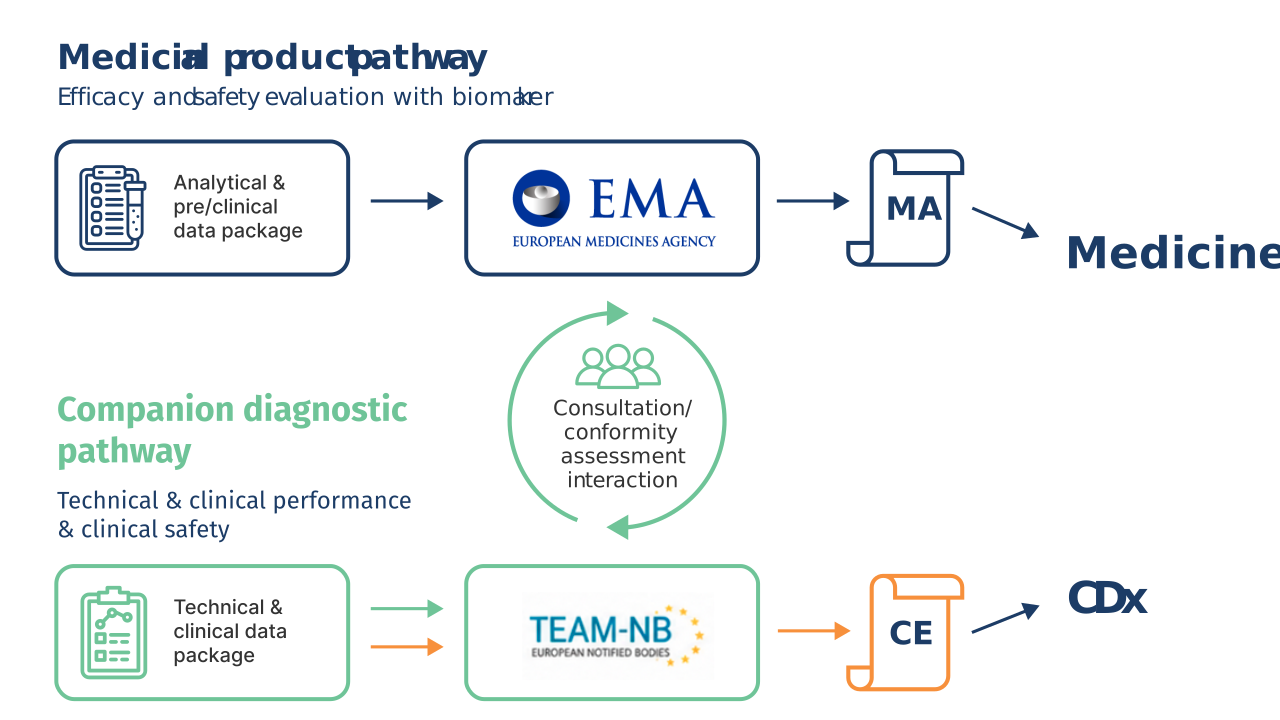
Figure 1. Parallel medicinal product and companion diagnostic assessment pathways in Europe. The IVDR companion diagnostic consultation procedure creates a formal interaction between medicines authorities and notified bodies during assessment of the companion diagnostic. The notified body retains responsibility for the conformity assessment and CE marking decision.
The Consultation Procedure
Before a notified body can issue a CE marking decision for a companion diagnostic, it must seek a scientific opinion from a competent medicines authority on the suitability of the companion diagnostic in relation to the corresponding medicinal product.² The applicable authority depends on the regulatory status of the medicinal product:
For medicinal products authorized through, or for which an application has been submitted through, the centralised procedure (the pan-European authorization route managed by the EMA, covering certain oncology, rare disease, and other designated product categories under Regulation (EC) No 726/2004), the notified body consults the EMA.
- For medicinal products authorized through, or for which an application has been submitted through, the centralised procedure (the pan-European authorization route managed by the EMA, covering certain oncology, rare disease, and other designated product categories under Regulation (EC) No 726/2004), the notified body consults the EMA.
- For medicinal products authorized nationally through member state procedures, the notified body consults the relevant national competent authority responsible for that authorization.
The consultation procedure does not transfer responsibility for CE marking to the medicines authority. The notified body remains responsible for the conformity assessment decision. However, the scientific opinion must be given due consideration as part of that decision.
The opinion addresses the suitability of the companion diagnostic in relation to the corresponding medicinal product. Elements considered include the scientific rationale supporting the biomarker, analytical performance, clinical performance, and the relationship between the diagnostic claim and the therapeutic indication.³
Planning Considerations
The EMA guidance specifies that the notified body should submit the consultation application during the last phase of the evaluation of the corresponding Marketing Authorisation Application (MAA), with a letter of intent submitted at least three months before the planned consultation submission date. The EMA delivers its scientific opinion within 60 days of receipt of complete documentation, with one possible 60-day extension on justified grounds.
This creates a practical timing dependency between the CDx conformity assessment and the therapeutic MAA evaluation. CDx manufacturers and medicine sponsors who have not explicitly planned for this dependency risk delays in CE marking that can affect therapeutic product availability and patient access to biomarker-directed treatment.
What We Have Learned Since 2022
Several themes have emerged repeatedly during implementation of the IVDR companion diagnostic framework. Notably, these same themes now appear in the mandates and published outputs of both the CDx Expert Group and COMBO.
Companion Diagnostic Determination
Does the device meet the IVDR companion diagnostic definition?
Classification affects the applicable conformity assessment procedure, whether consultation with a medicines authority is required, and the overall regulatory pathway.
Consultation Requirements
When is consultation required and which authority should be consulted?
Whether EMA or a national competent authority is consulted depends on the regulatory status of the corresponding medicinal product and its authorization pathway.
Development Coordination
How should therapeutic and diagnostic development activities be coordinated?
The consultation procedure submission should occur during the last phase of the MAA evaluation, creating a timing dependency that must be planned for from early in co-development.
Labeling Alignment
How should intended use and therapeutic labeling align?
Differences in biomarker terminology, variant descriptions, and patient population definitions between the SmPC and the diagnostic intended use statement have been a recurring source of regulatory friction.
Figure 2. Key implementation challenges emerging from early IVDR companion diagnostic experience.
Determining Whether a Test Is a Companion Diagnostic Is Not Always Straightforward
One of the recurring topics identified by COMBO is the distinction between companion diagnostics and other IVDs used in clinical practice.⁴ While the legal definition in Article 2(7) is relatively straightforward, practical application can be more challenging. Biomarkers may be associated with multiple therapies, may support treatment decisions without being explicitly required in product labeling, or be used for patient stratification in ways that do not clearly meet the IVDR companion diagnostic definition. For example, a biomarker assay may be routinely used by clinicians when selecting treatment yet not be considered a companion diagnostic if testing is not essential for the safe and effective use of a specific medicinal product.
This distinction matters because it determines the applicable conformity assessment procedure and whether consultation with a medicines authority is required. MDCG 2020-16 Annex II provides examples intended to support assessment of whether a device meets the companion diagnostic definition.⁵
The Consultation Procedure Has Highlighted the Importance of Early Planning
The consultation procedure introduces a formal regulatory dependency between companion diagnostic development and the corresponding therapeutic program. The scientific opinion requires that evidence be available on the scientific rationale for the biomarker, analytical performance, clinical performance, and the relationship between the diagnostic claim and the therapeutic indication.³ Generating this evidence requires active coordination between diagnostic and therapeutic development programs.
CDx manufacturers and medicine sponsors developing biomarker-directed therapies should consider diagnostic development strategy, analytical validation, and clinical performance evidence in parallel with therapeutic development. Experience since implementation of the IVDR has demonstrated that companion diagnostic considerations are often more difficult to address when introduced late in development, particularly where the intended purpose and performance claims of the diagnostic have already been established and key evidence generation activities have been completed. . Early planning provides greater flexibility for aligning evidence generation activities, regulatory milestones and consultation timelines.
Alignment Between Therapeutic Labeling and Diagnostic Intended Use Remains Challenging
The Summary of Product Characteristics (SmPC) describes how the medicinal product should be used, including any biomarker-related requirements for patient selection. The companion diagnostic intended use statement defines the purpose and scope of the diagnostic. These descriptions are closely related but may be developed within different regulatory frameworks and, in co-development programs, by different organizations.
Differences in biomarker terminology, mutation descriptions, patient population definitions, or testing requirements can create significant challenges during regulatory review. For example, a medicinal product label may refer broadly to a biomarker-defined patient population while the companion diagnostic claim is supported only for specific variants within that population. Misalignment may become particularly difficult to address where the intended purpose and performance claims of the companion diagnostic have already been established.
The significance of this challenge is reflected in the mandate of the CDx Expert Group, which includes support for developing consistent approaches to describing companion diagnostics used for patient selection within medicinal product labeling.⁶ The inclusion of this responsibility within the Expert Group’s remit suggests that regulators view labeling alignment as more than a product-specific issue and one that warrants a consistent scientific approach across programs..
Why the EMA Created the Companion Diagnostics (CDx) Expert Group
The Companion Diagnostics Expert Group was formally established by the EMA in 2025 as a standing expert group supporting the Committee for Medicinal Products for Human Use (CHMP), the Committee for Advanced Therapies (CAT), and the Pharmacovigilance Risk Assessment Committee (PRAC).⁶ The group evolved from an earlier CDx Working Group established before application of the IVDR to develop the procedural framework for the consultation procedure.
The transition from a time-limited working group to a permanent standing expert group reflects recognition that companion diagnostic assessment requires sustained, specialized expertise spanning diagnostics, biomarkers, and medicinal products, and that building and maintaining this expertise within the European regulatory network requires an institutional home.
The CDx Expert Group’s responsibilities include scientific support for assessments involving companion diagnostics, development of approaches to biomarker-related questions, support for labeling consistency across programs, and knowledge sharing across the European regulatory network.⁶ The group focuses exclusively on companion diagnostics and contributes scientific expertise to issues arising during consultation procedures and medicinal product evaluations.
CDx manufacturers and medicine sponsors do not engage with the CDx Expert Group directly. Its existence nevertheless signals a continued investment in specialized expertise and greater consistency in companion diagnostic assessment across the European regulatory network.
Why COMBO Was Established
The Combination Products Operational Group (COMBO) was established jointly by the EMA and European Commission in October 2025 to facilitate discussion among medicines regulators, medical device competent authorities, and notified bodies.⁴
Unlike the CDx Expert Group, COMBO is not focused specifically on companion diagnostics. Its remit encompasses products and regulatory challenges at the interface between medicines and medical device legislation, including integral drug-device combinations, co-packaged products, drug delivery systems, and companion diagnostics. Within COMBO, companion diagnostics represent one category of products that raise operational and procedural questions at the interface between medicines and medical device regulation.
COMBO’s role is therefore different from that of the CDx Expert Group. The CDx Expert Group focuses on scientific assessment of companion diagnostics. COMBO addresses system-level implementation challenges that arise at the regulatory interface between the pharmaceutical and medical device frameworks.
The first published outputs from COMBO’s IVD stream identified determination of whether a device meets the companion diagnostic definition, implementation of the consultation procedure, scope of consultation requirements, and alignment between medicinal product references and diagnostic claims as areas requiring further development and discussion.⁴ Notably, these topics closely mirror the implementation challenges described above.
As with the CDx Expert Group, CDx manufacturers and medicine sponsors do not engage with COMBO directly. COMBO is a forum for regulators and notified bodies. However, COMBO’s published highlight reports are publicly available on the EMA website and provide a useful indication of where regulatory guidance for companion diagnostics is heading. Companies developing companion diagnostics or biomarker-directed therapies should monitor these outputs as they become available.
Practical Considerations for CDx Manufacturers and Medicine Sponsors
The establishment of the CDx Expert Group and COMBO does not change the requirements of the IVDR. Both initiatives do, however, provide insight into areas where implementation has proven more challenging than initially anticipated and where regulatory attention is now focused.
Early assessment of whether a device meets the IVDR companion diagnostic definition remains important. Classification determines the applicable conformity assessment requirements and whether a consultation procedure is required.
Development planning should consider the evidence needed to support both the companion diagnostic and the corresponding medicinal product. The consultation procedure creates a timing dependency between the two programs that should be considered early to allow alignment of evidence generation activities and regulatory milestones.
Alignment between the diagnostic intended use statement and therapeutic labeling, particularly the biomarker descriptions and patient population definitions in the SmPC, should be considered early in development, especially in co-development programs where the medicinal product and companion diagnostic are the responsibility of different organizations.
Conclusion
Four years after application of the IVDR companion diagnostic framework, CDx manufacturers, medicine sponsors, notified bodies, and regulators have accumulated meaningful experience with the applicable conformity assessment and consultation procedures.
The establishment of the CDx Expert Group and COMBO reflects recognition that certain aspects of the companion diagnostic framework remain operationally challenging. Both groups address themes that have emerged consistently during implementation: the boundary of the companion diagnostic definition, the mechanics of the consultation procedure, and alignment between diagnostic and therapeutic regulatory activities.
Together, they signal a sustained investment by the European regulatory community in the expertise, consistency, and coordination that the companion diagnostic framework requires. CDx manufacturers and medicine sponsors who understand these developments, and who plan their programs with the specific requirements and dependencies of the IVDR consultation procedure in mind, will be better positioned to navigate the European regulatory framework efficiently.
The creation of the CDx Expert Group and COMBO should not be viewed as the introduction of new regulatory requirements. Rather, they represent the maturation of a regulatory framework that continues to evolve as practical experience accumulates. For CDx manufacturers and medicine sponsors, understanding these evolving expectations is increasingly important when planning development and regulatory strategies for the European market.
References
1. Regulation (EU) 2017/746 of the European Parliament and of the Council of 5 April 2017 on in vitro diagnostic medical devices (IVDR), Article 2(7); Article 48; Annex IX. Available at: https://eur-lex.europa.eu/legal-content/EN/TXT/?uri=CELEX:32017R0746
2. Regulation (EU) 2017/746, Annex IX Section 5.2(c). See also: EMA. Guidance on procedural aspects for the consultation to the EMA by a notified body on companion diagnostics. EMA/198592/2022 Rev.1. December 2024.
3. EMA. Questions and Answers: Practical arrangements on the companion diagnostics consultation procedure to the EMA by notified bodies. EMA/619893/2022 Rev.3. April 2026.
4. EMA. Highlight report: Combination Products Operational Group (COMBO) In Vitro Diagnostics stream. November 2025. EMA/353484/2025.
5. MDCG 2020-16 Rev.4. Guidance on Classification Rules for In Vitro Diagnostic Medical Devices under Regulation (EU) 2017/746. Annex II.
6. EMA. Mandate, objectives and rules of procedure for the CHMP Companion Diagnostics Expert Group. EMA/115804/2025.
7. Aarum S et al. Multistakeholder scientific advice for medicinal products used in combination with a medical device or a companion diagnostic in the EU. Frontiers in Medicine. 2025;12. doi:10.3389/fmed.2025.1593644